An island that refuses to be just one thing.

Sri Lanka is a destination that genuinely surprises – not because it is undiscovered, but because what it contains defies easy categorisation. Ancient sacred cities still used as living places of worship stand within a few hours of leopard-rich wilderness, colonial hill towns, surf coastlines and rain forests that predate human memory. This is the map of places that make Sri Lanka worth the journey.

Stone kingdoms. Living temples. A civilization still breathing.

Sri Lanka’s ancient heartland contains some of Asia’s most extraordinary built heritage – fortress cities, hydraulic engineering systems, rock-carved religious monuments and royal pleasure gardens that have survived two millennia in the tropical interior. These are not ruins in the European sense; many remain active centres of Buddhist devotion visited by locals as well as travelers.

DAMBULLA

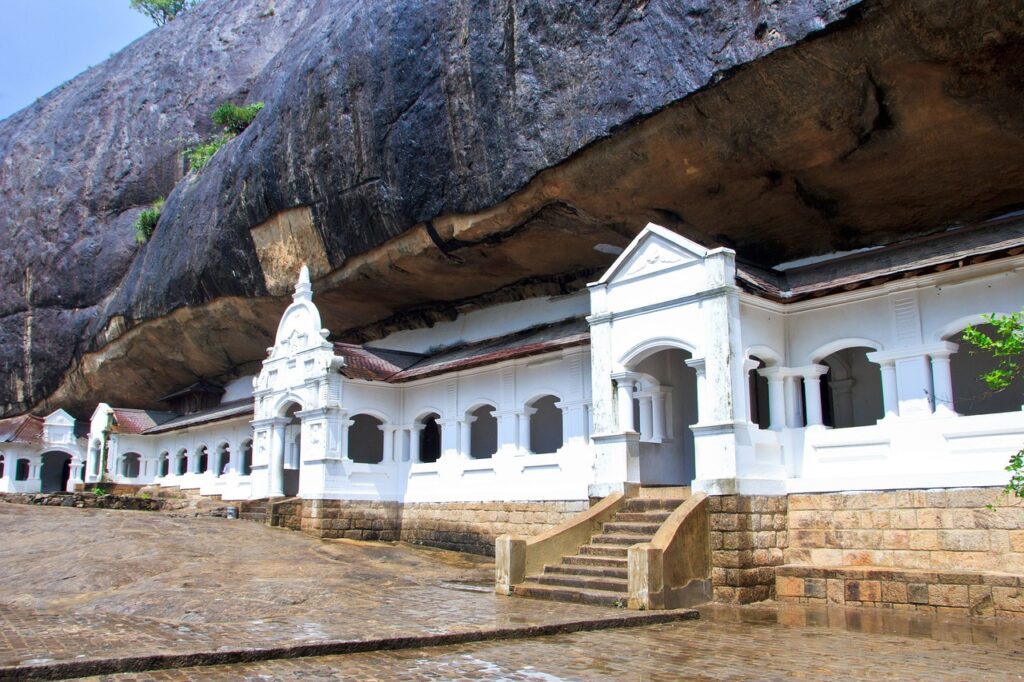
Carved into a massive granite outcrop overlooking the plains of the Cultural Triangle, the Dambulla Cave Temple complex contains five caves of Buddhist art accumulated over two millennia. The painted ceilings and walls constitute the largest and best-preserved collection of cave murals in Sri Lanka, depicting scenes from the life of the Buddha alongside royal patrons, guardian deities and the full cast of a living mythology.

KANDY

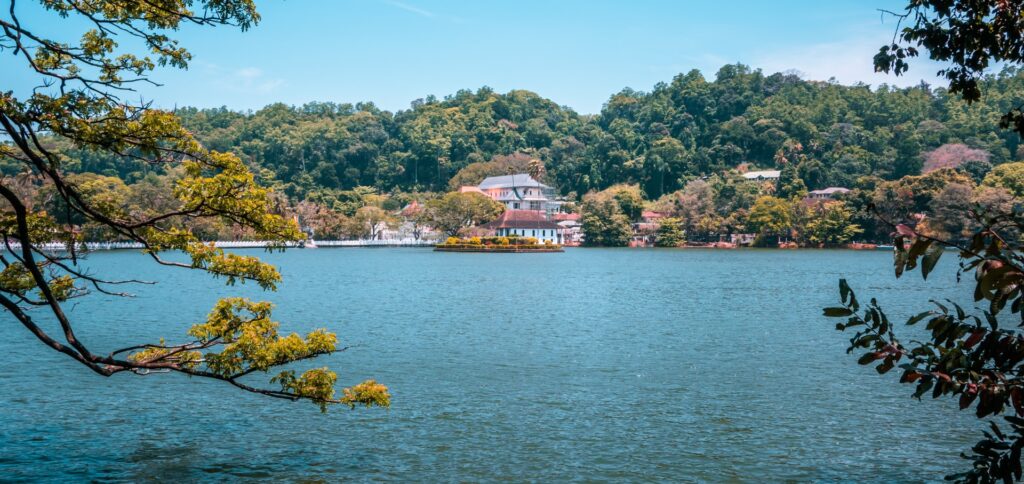
Kandy sits in a bowl of hills in the central highlands, its Sacred Lake reflecting the roof of the Temple of the Tooth Relic – the most venerated Buddhist shrine in the world. The city moves to a slower rhythm than the coastal towns, its streets filled with the smell of incense and the sound of drums each evening during Puja ceremonies. The surrounding hill country, botanical gardens and tea estates make Kandy a natural base for highland travel.

POLONNARUWA

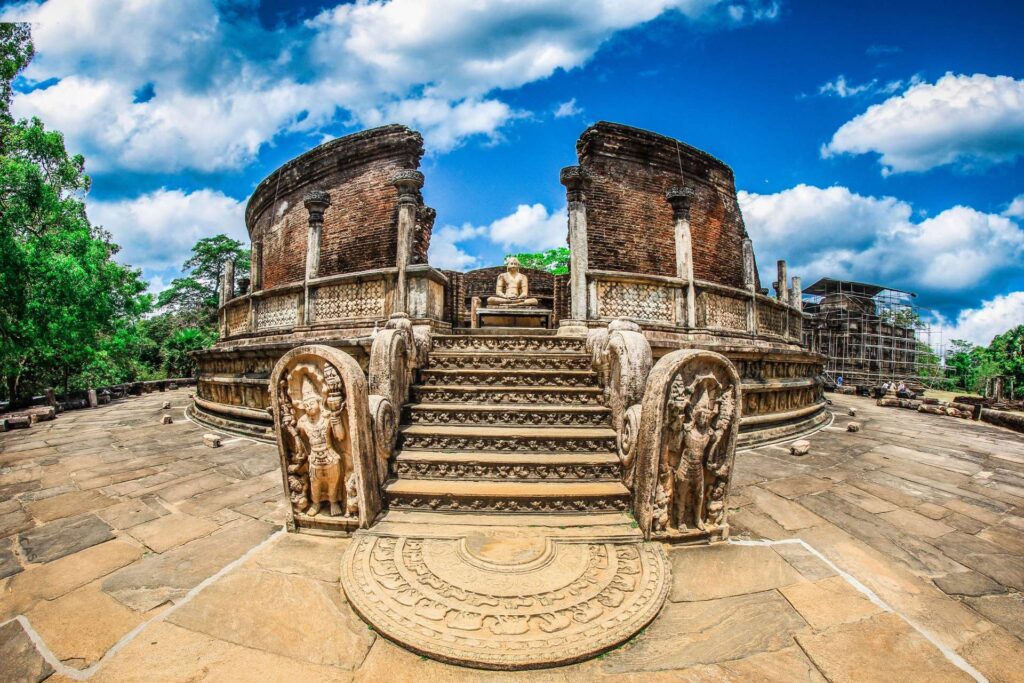
Sri Lanka’s second great medieval capital sits in the dry northern plains, its ruins spread across a landscape of reservoirs and forest. The Gal Vihara – four enormous figures of the Buddha carved directly into a single granite outcrop – is among the finest examples of stone carving in Asia. Unlike Anuradhapura, Polonnaruwa’s sites are concentrated enough to feel like a coherent ancient city rather than a scattered field of monuments.

ANURADHAPURA

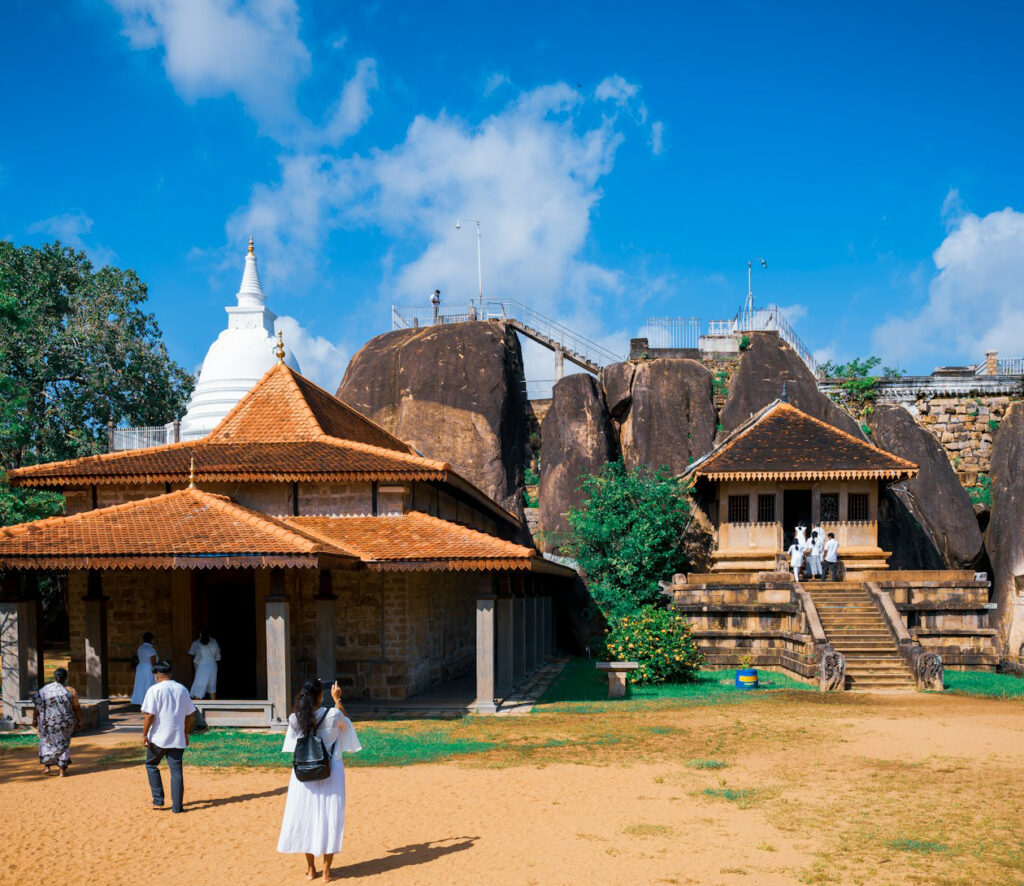
The island’s first great capital, inhabited continuously for over a thousand years, Anuradhapura is a sacred city of extraordinary scale. The Sri Maha Bodhi – a sacred fig tree grown from a cutting of the very tree under which the Buddha attained enlightenment – stands here, tended without interruption for over two thousand years. Surrounding it are dagobas of almost impossible proportions and moonstone carvings of rare refinement.

SIGIRIYA

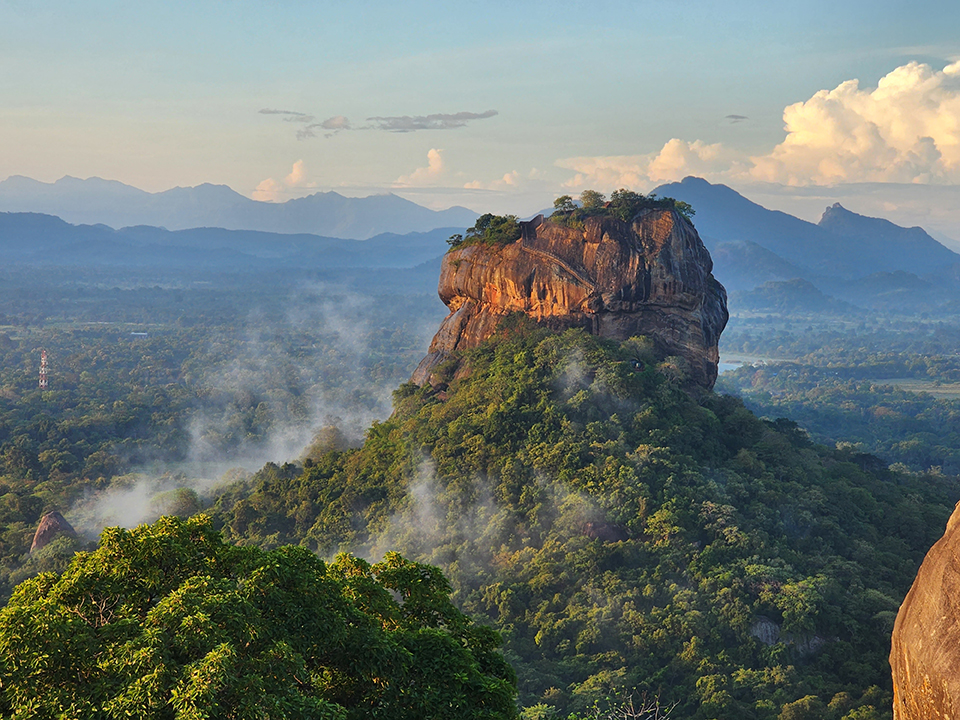
The Lion Rock rises 200 metres from the surrounding jungle plain like a geological declaration of power. Built as a royal palace complex by King Kashyapa in the 5th century, Sigiriya is Sri Lanka’s most recognized landmark and one of the most extraordinary archaeological sites in Asia. The climb passes ancient water gardens, cloud frescoes painted into sheer rock faces and a gateway through the paws of a lion that no longer exists above the waist. The views from the summit are genuinely worth every step.

The Indian Ocean, in fourteen different moods.

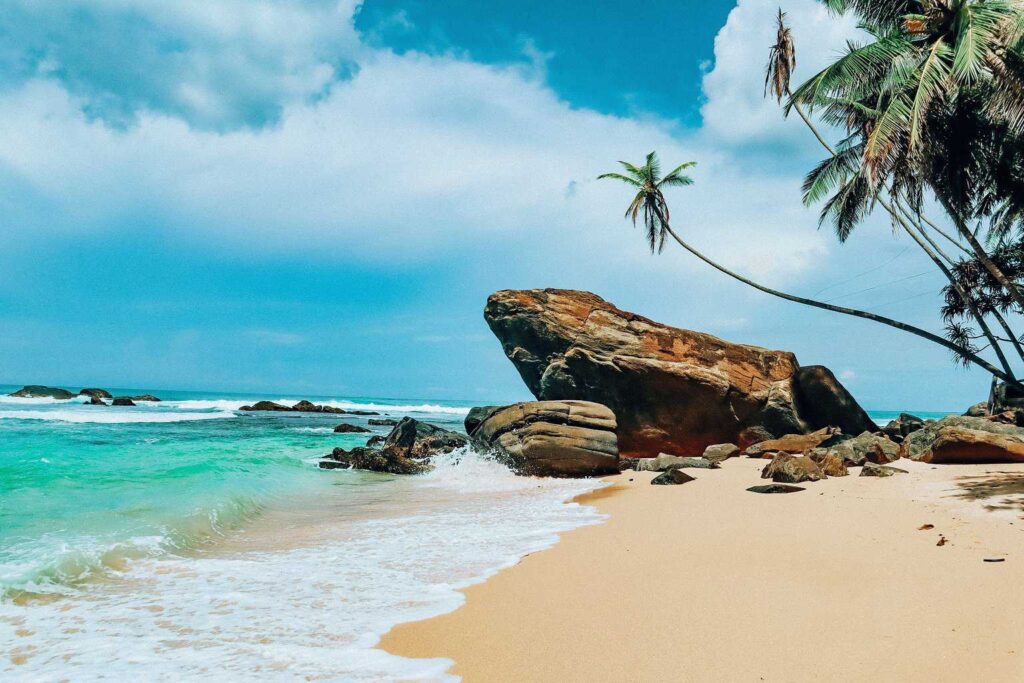
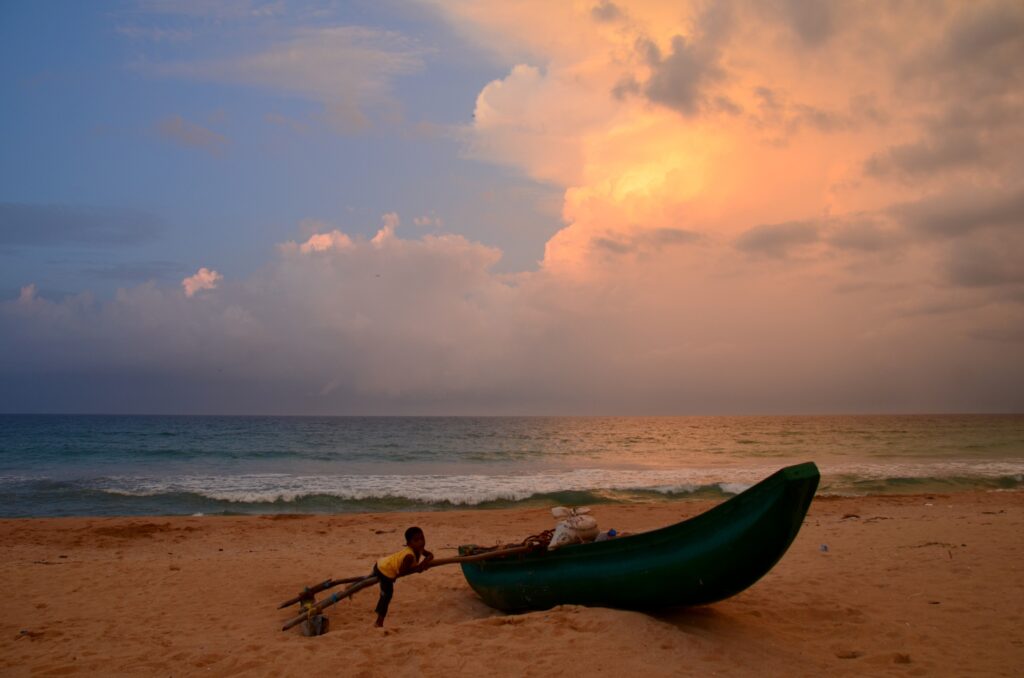
Sri Lanka’s coastline runs for over 1,600 kilometres and contains some of the most varied beach environments in the Indian Ocean – from the sheltered reef coves of the south to the surf-blown eastern bays, the colonial harbour towns of the west and the wild, unhurried beaches of the far south. Each stretch has its own character, season and distinct reason to visit.

PASIKUDAH

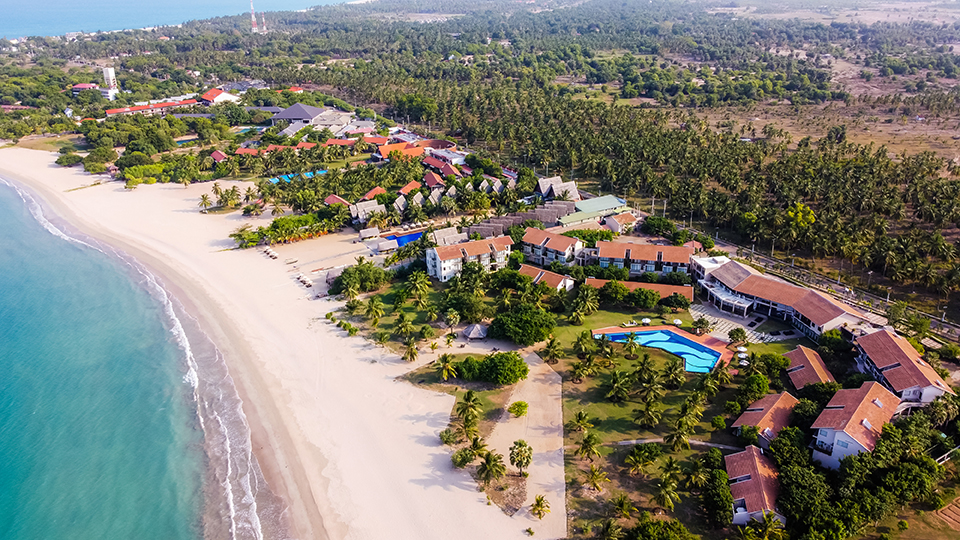
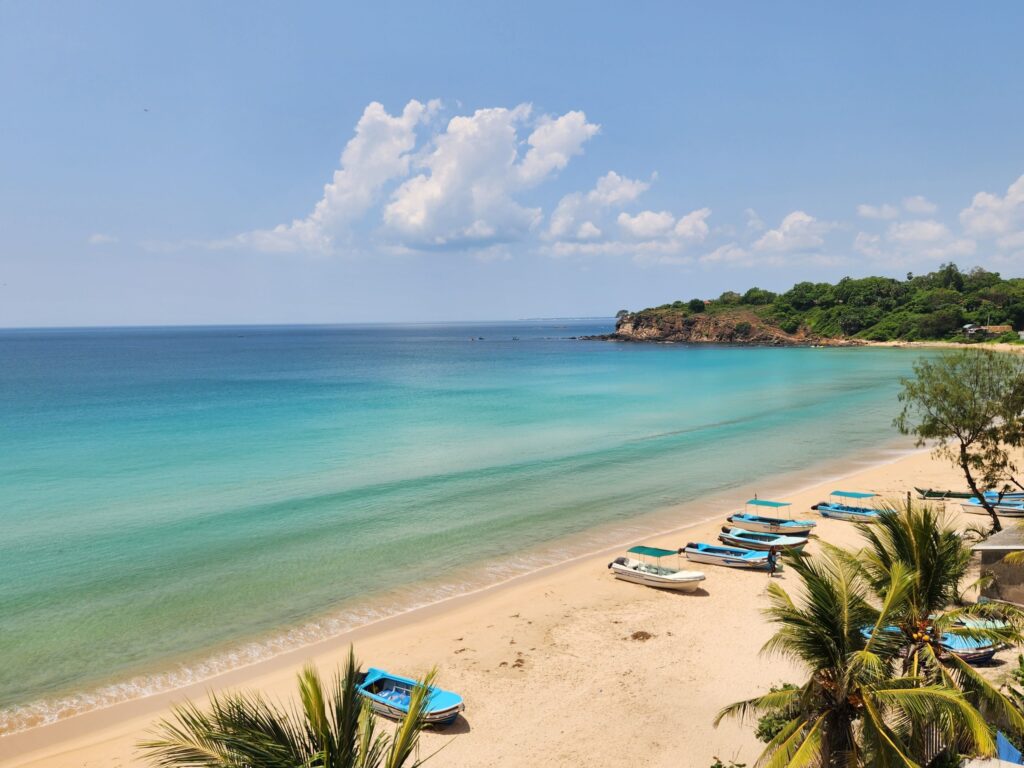
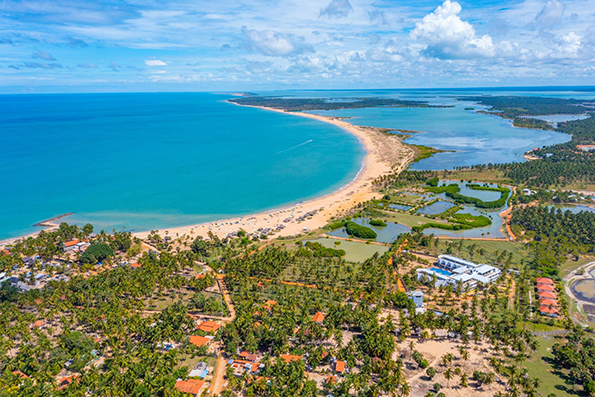
Pasikudah’s shallow lagoon – flat, warm and turquoise for hundreds of metres from shore – is one of the most extraordinary natural sea environments on the island. The water is calm enough for young children and the bay is flanked by resort properties that occupy one of the most scenic coastal settings in Sri Lanka’s east.

TRINCOMALEE

Trincomalee on the northeast coast is one of the finest natural deep-water harbours in the world, surrounded by beaches of white sand that rival anything on the south coast. Nilaveli and Uppuveli are the key beach stretches here – less developed, genuinely beautiful and backed by a historical port city with significant colonial and ancient heritage. Whale watching and diving are available seasonally.

ARUGAM BAY

On the eastern coast, Arugam Bay is Sri Lanka’s surfing capital – a point break of international reputation that draws serious surfers from June to September and a growing community of visitors who arrive for the surf culture and stay for the leopard-spotted national parks that begin just kilometres inland.

WELIGAMA

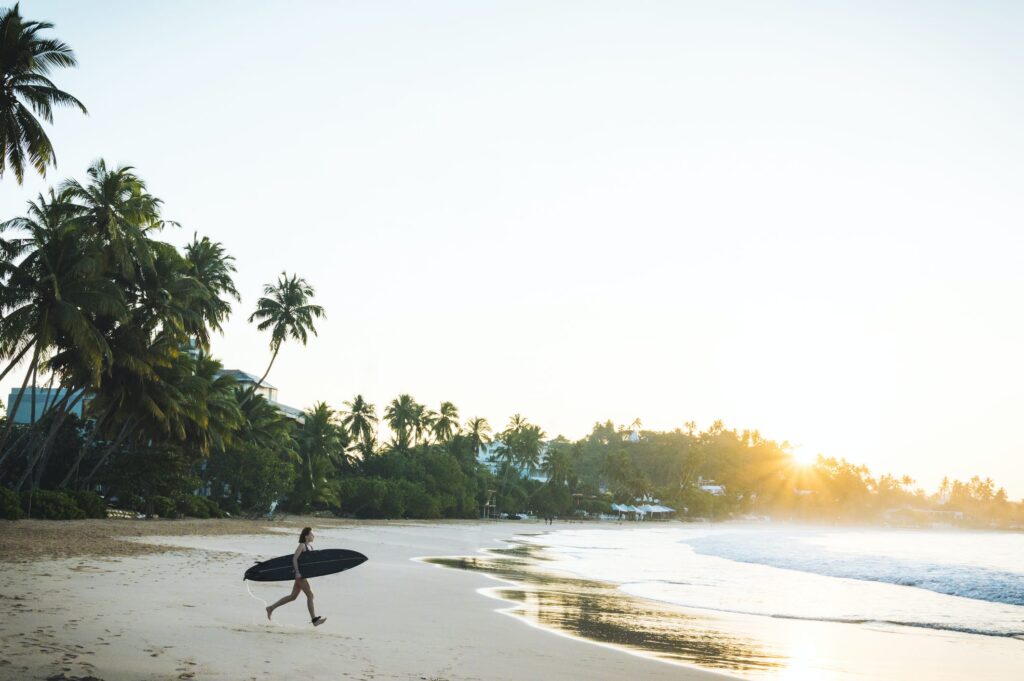
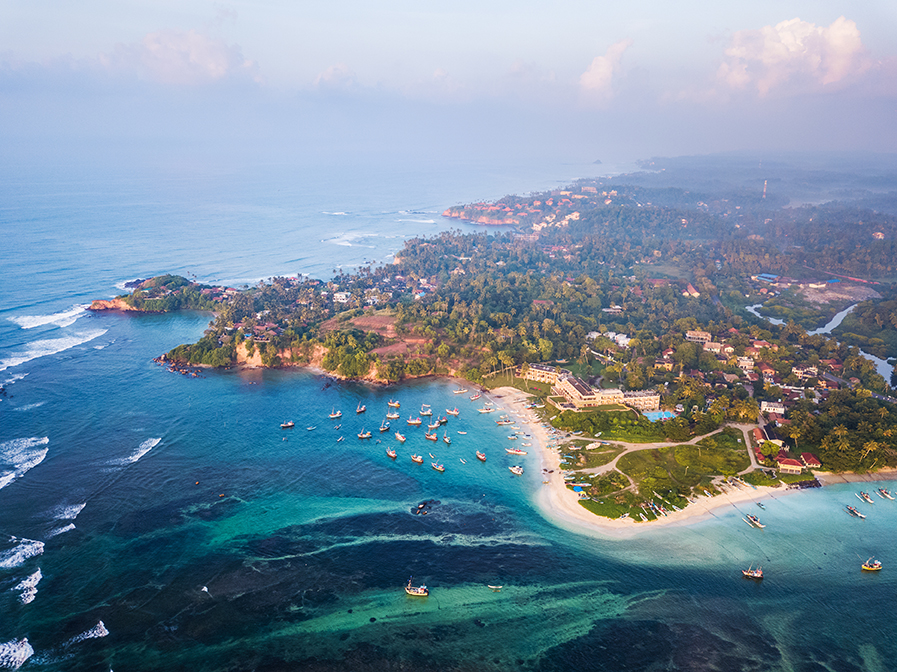
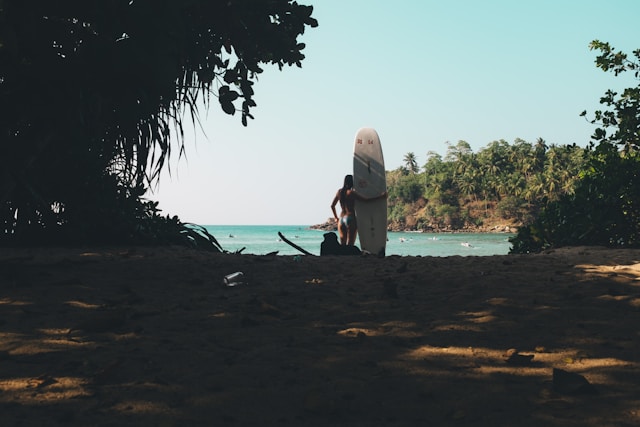
Weligama’s wide, gentle bay is the place where Sri Lanka’s surf culture and its tourism culture meet most naturally. The break here is ideal for beginner and intermediate surfers, and the town has grown a community of surf schools, longboard cafes and casual beach stays that give it a distinct energy without losing the fishing-village bones underneath.

MIRISSA

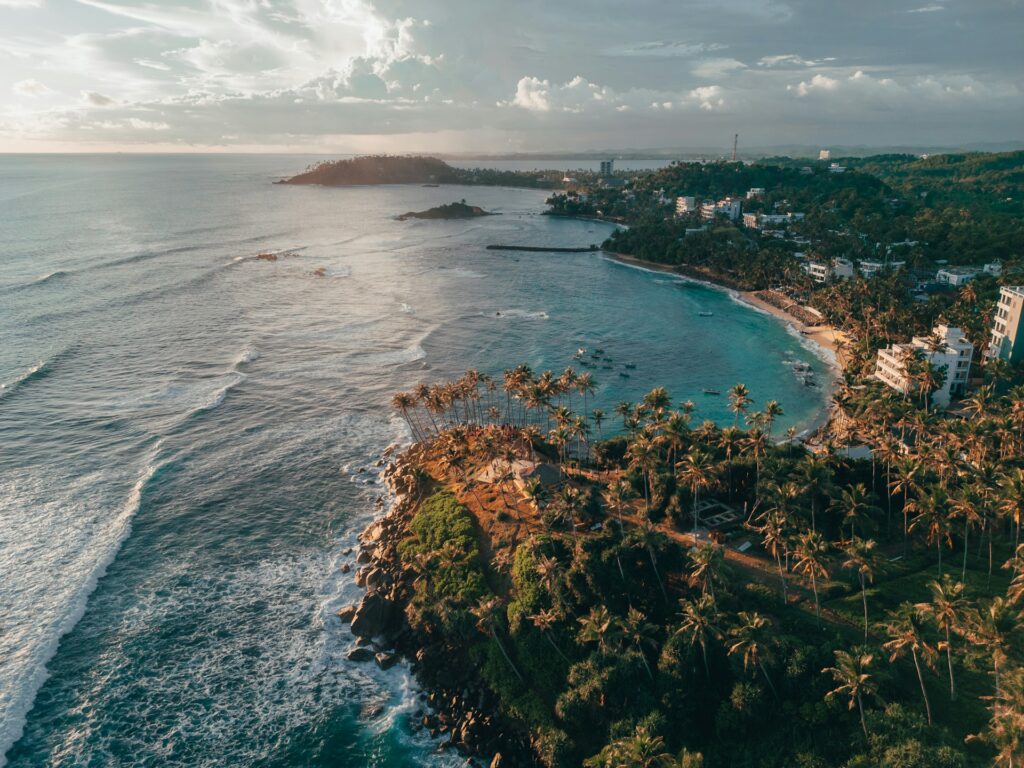
Mirissa is best known as Sri Lanka’s premier whale watching destination, with blue whales and sperm whales resident in the deep waters offshore from November to April. Beyond the whale boats the town is a relaxed southern beach with surf conditions in the east-season months and a crescent of sand well-suited to doing very little very happily.

GALLE

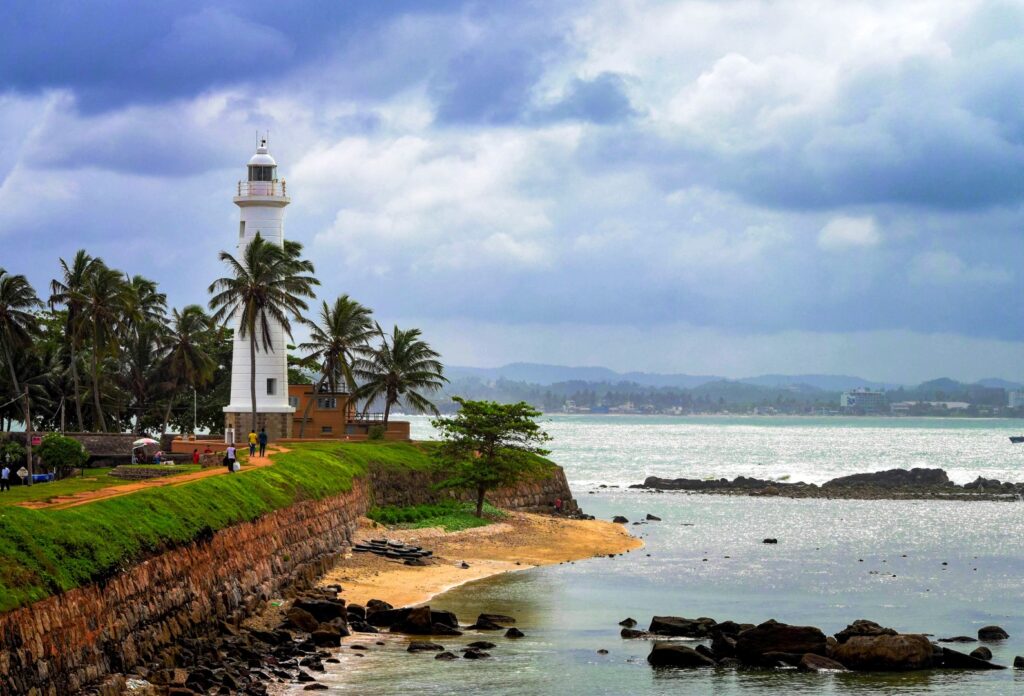
Galle Fort is among the most complete surviving examples of a Dutch colonial fortified town anywhere in the world – a walled city of cobblestoned streets, whitewashed walls, boutique cafes and a rampart walk with uninterrupted ocean views on three sides. The fort is a UNESCO World Heritage Site but also a living neighbourhood, home to tailors, jewelers, galleries and guesthouses that have been trading for generations.

UNAWATUNA

A horseshoe bay south of Galle Fort, Unawatuna offers calm, swimmable waters in a setting that balances resort comfort with village character. The beach faces west, making it one of the best sunset shores on the southern coast. It sits conveniently between Galle and Mirissa, making it a natural overnight stop on any southern itinerary.

HIKKADUWA

Hikkaduwa is Sri Lanka’s original beach destination – a place of coral reef snorkeling, surf breaks and an easy social life that has attracted travelers since the backpacker era of the 1970s. The reef here is protected and genuinely alive, with sea turtles a near-certainty on any morning snorkel. The town wears its popularity lightly and remains one of the most accessible introductions to the island’s southern coast.

BENTOTA

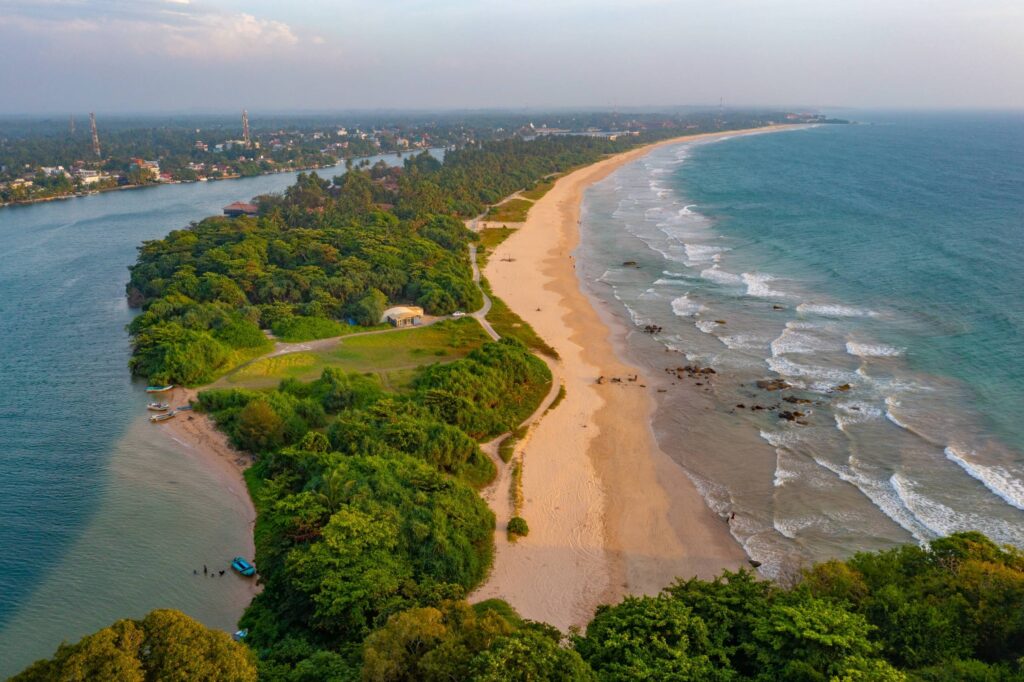
Bentota is the quiet counterpoint to the busier southern beaches – a long curve of clean sand on a river estuary where water sports, river safaris and boutique resort stays coexist at a pace that feels genuinely unhurried. The Bentota River is a remarkable environment in its own right, lined with mangroves and home to crocodiles, monitor lizards and kingfishers visible from simple boat rides.

NEGOMBO

Negombo sits just north of the international airport and rewards the traveler who looks beyond the expected beach resort. The old Dutch canal, the fishing fleet that works the lagoon before dawn and the colonial Catholic churches built in the hybrid style of a converted fishing community give this town a texture that most visitors miss entirely by heading directly inland.

Where the animals have the right of way.

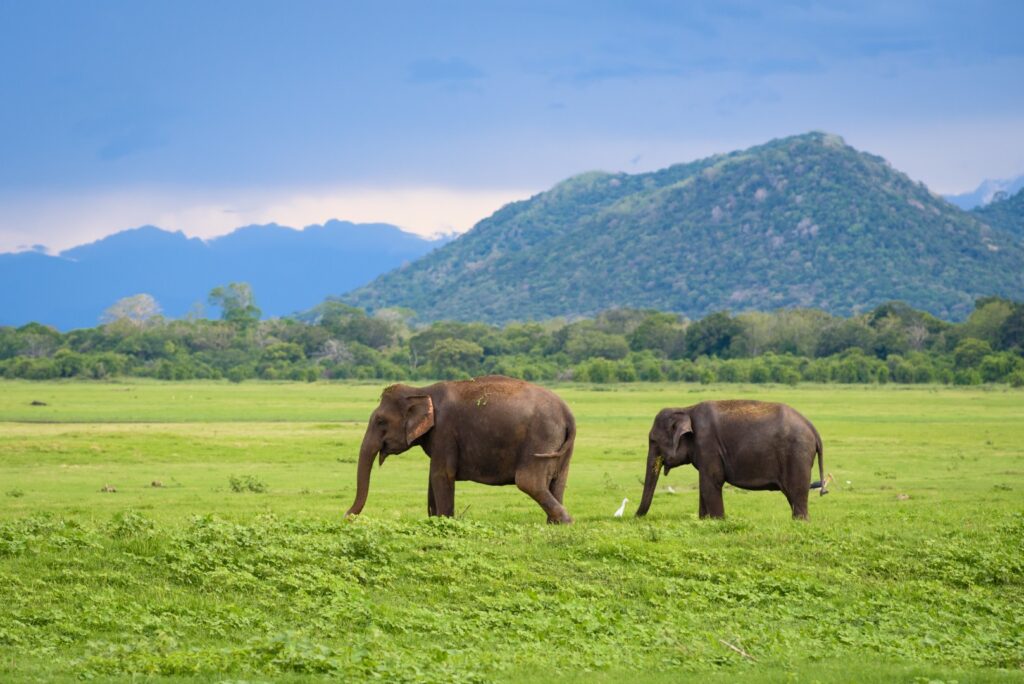
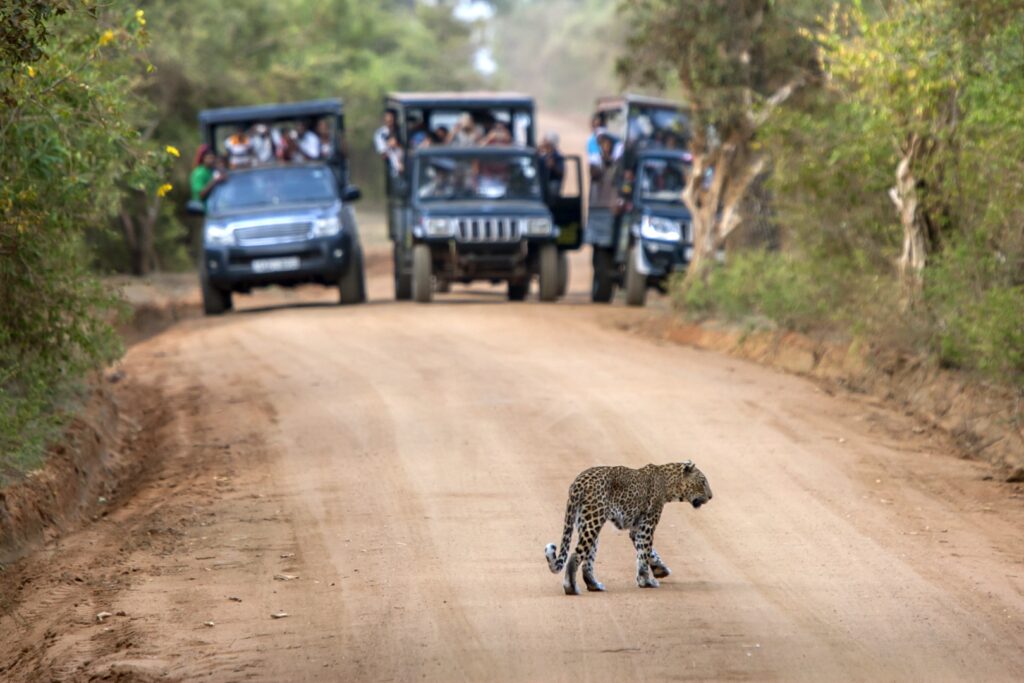
Sri Lanka is one of the world’s most wildlife-dense destinations for its size – a fact that becomes immediately apparent on any jeep track in the dry zone national parks. The island holds the highest density of leopards recorded anywhere, maintains resident populations of Asian elephant, and sits beneath migratory flyways that make it a birdwatcher’s landmark destination. The parks below represent the finest windows into this extraordinary wildlife heritage.

SINHARAJA RAINFOREST

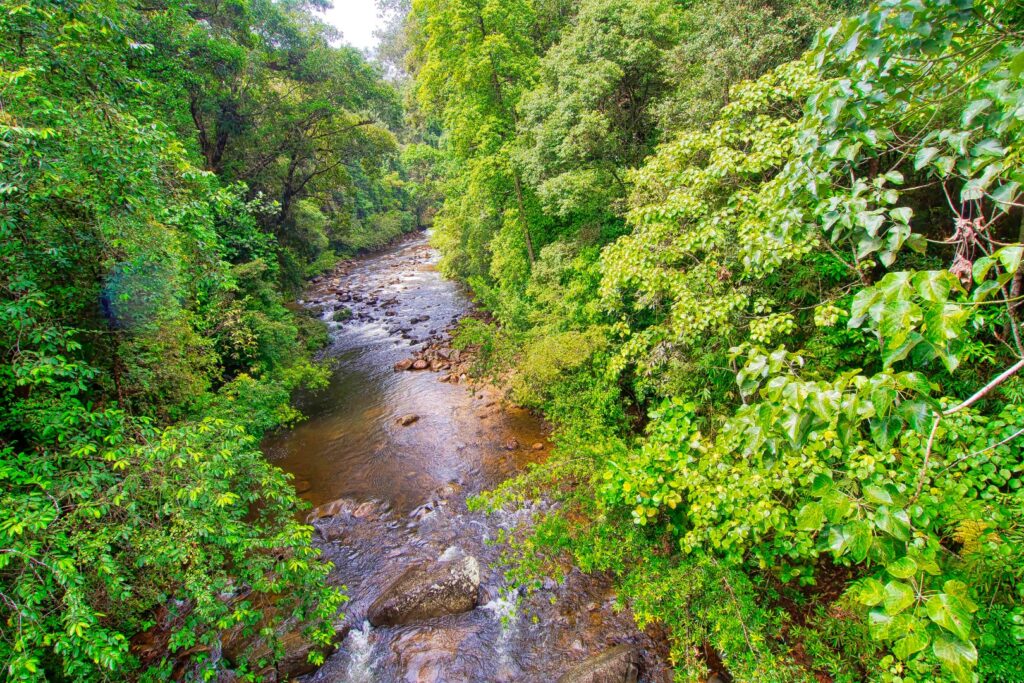
Sinharaja is Sri Lanka’s last surviving large tract of lowland tropical rainforest and a UNESCO World Heritage Site of global ecological significance. The biodiversity here is staggering – over 60 percent of Sri Lanka’s endemic birds can be found in a single morning’s walk, alongside extraordinary butterfly, reptile and mammal populations. Birding in Sinharaja is an experience that draws ornithologists from across the world.

WASGAMUWA NATIONAL PARK

Wasgamuwa sits in Sri Lanka’s north-central dry zone, a buffer zone between the Cultural Triangle and the eastern lowlands that is rarely included in standard itineraries. Its remoteness is precisely its appeal – a wilderness of riverine forest and dry plains supporting healthy elephant herds, leopards and a birdlife of exceptional richness, encountered largely without the jeep traffic of the more famous parks.

MINNERIYA NATIONAL PARK

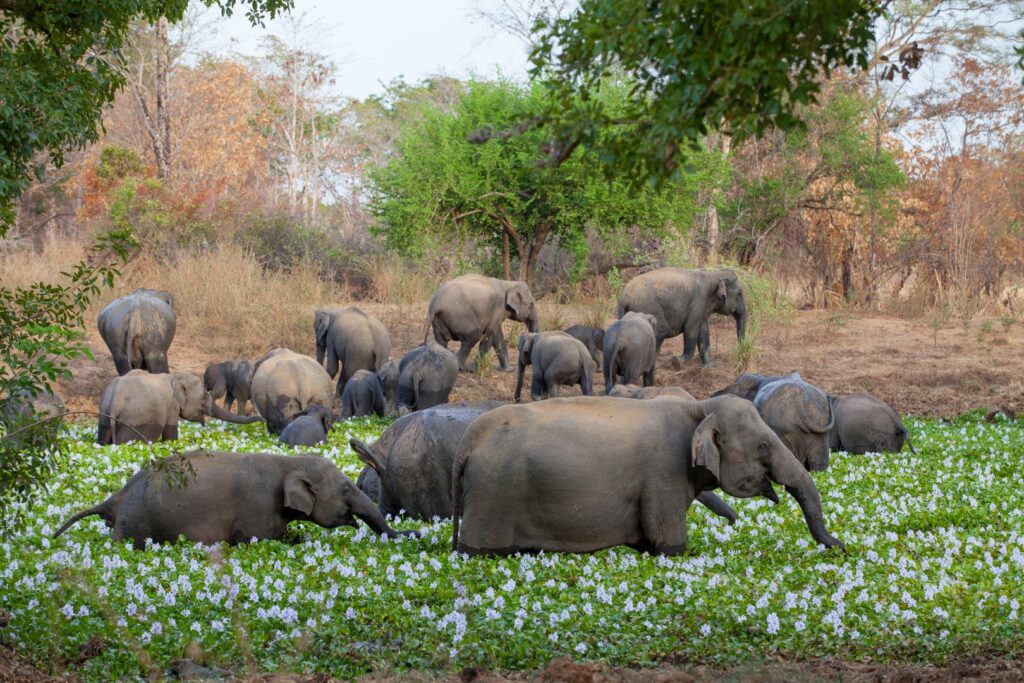
Minneriya is famous for a single extraordinary annual event – The Gathering, in which hundreds of Asian elephants converge on the drying shores of the Minneriya Reservoir between June and September. It is one of the largest concentrations of wild Asian elephants recorded anywhere on the planet and a wildlife spectacle with very few equivalents.

WILPATTU NATIONAL PARK

Sri Lanka’s largest national park and among its least visited, Wilpattu is a wilderness of villus – shallow natural lakes – surrounded by scrub forest that has been left mostly to itself for decades. The leopard population here is healthy and the absence of the crowds that sometimes concentrate in Yala makes for a safari experience with a genuine sense of wildness.

YALA NATIONAL PARK

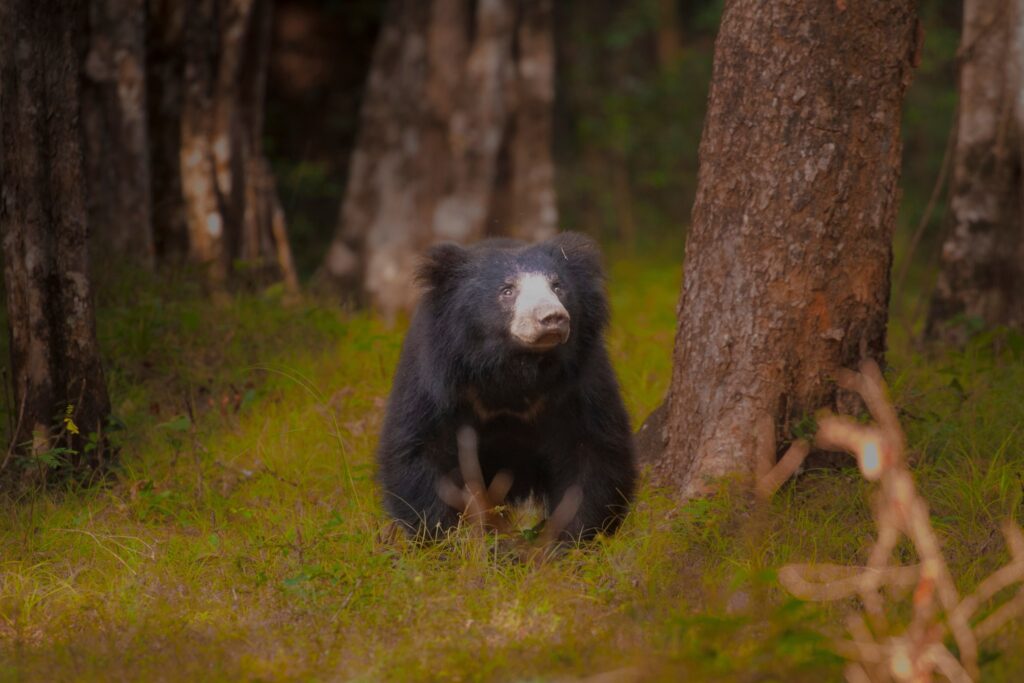
Sri Lanka’s most visited national park and the world’s most leopard-dense protected area per square kilometre. Yala’s Block 1 is a landscape of coastal lagoons, grasslands and dry monsoon forest that holds not just leopards but elephants, sloth bears, crocodiles, and an extraordinary list of endemic and migratory birds. Afternoon and early morning safaris give the best wildlife encounter conditions.

Where the air tastes different and the views ask you to sit down.

Sri Lanka’s central highlands are a landscape apart – a world of cloud forest, waterfall-cut valleys, colonial tea estates and rock faces that challenge and reward in equal measure. The hill country is where Sri Lanka’s adventure travel lives, where its most famous railway operates and where the island’s ecology shifts entirely from tropical coastal to cool-climate highland.

KALPITIYA

Kalpitiya is a peninsula on the northwest coast where a shallow, wind-steady lagoon has made it the unquestioned kite-surfing capital of Sri Lanka. But Kalpitiya also holds one of the finest dolphin-watching environments in the Indian Ocean – resident spinner dolphins by the thousand inhabit the waters off the peninsula, and whale sharks appear seasonally in the channels between the islands.

KITULGALA

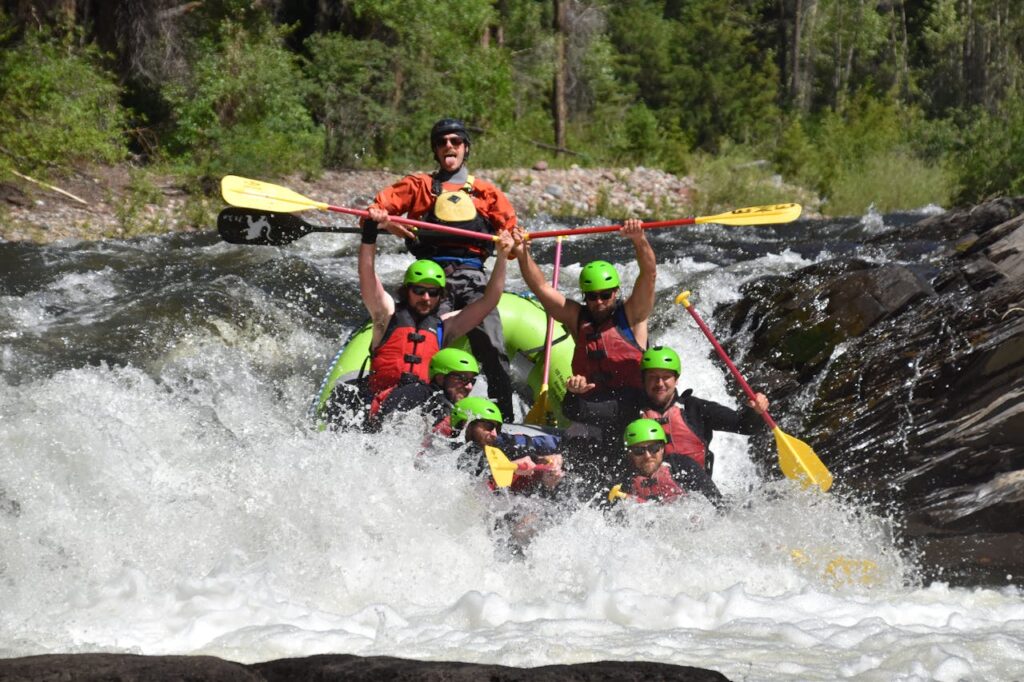
Kitulgala is Sri Lanka’s white-water rafting capital, sitting on the Kelani River in the wet zone foothills where the rapids and jungle scenery combine to produce one of the island’s finest adventure day experiences. Beyond rafting, the surrounding forests offer birdwatching of extraordinary quality – the endemic bird list here is among the richest in the island.

KNUCKLES MOUNTAIN RANGE

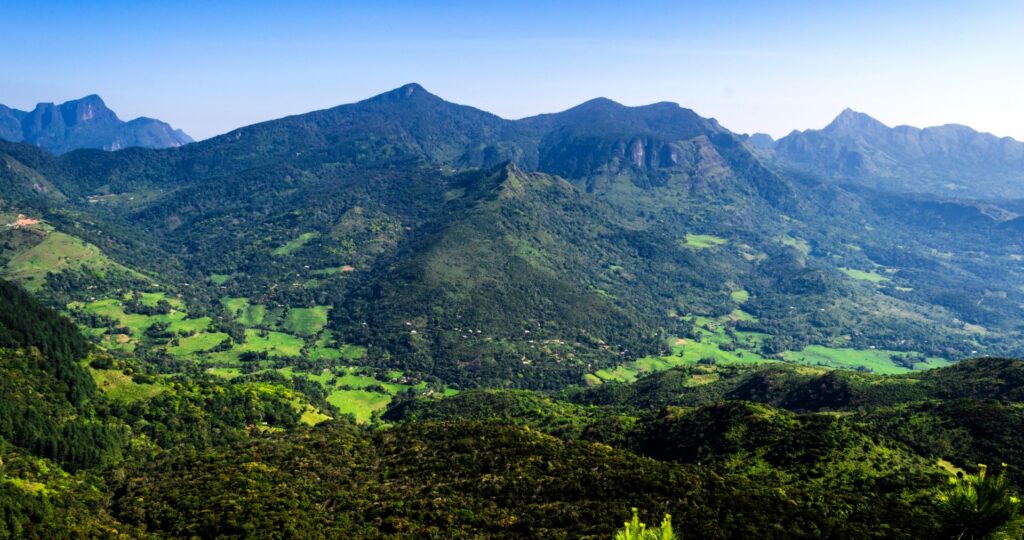
The Knuckles Range is a UNESCO biosphere reserve of extraordinary ecological complexity – a highland wilderness of cloud forest, waterfalls, endemic wildlife and walking trails that remain genuinely off the main tourism circuit. The range is named for the knuckle-like silhouette it presents from the Kandy plains below and delivers multi-day trekking experiences of rare quality.

HORTON PLAINS

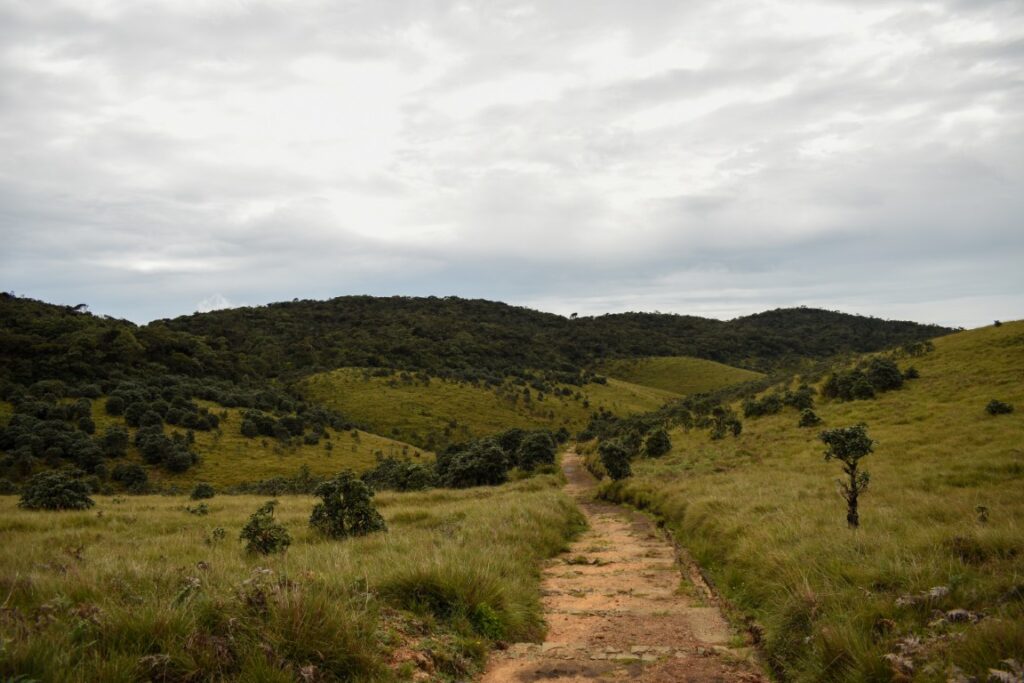
Horton Plains is a high-altitude plateau at almost 2,000 metres, a rolling grassland ecosystem punctuated by cloud forest patches and some of the most dramatic viewpoints on the island. World’s End is a sheer escarpment where the plateau simply stops, dropping over 800 metres to the jungle lowlands below – a view that requires good timing and an early start to see clearly before the cloud rolls in.

ELLA

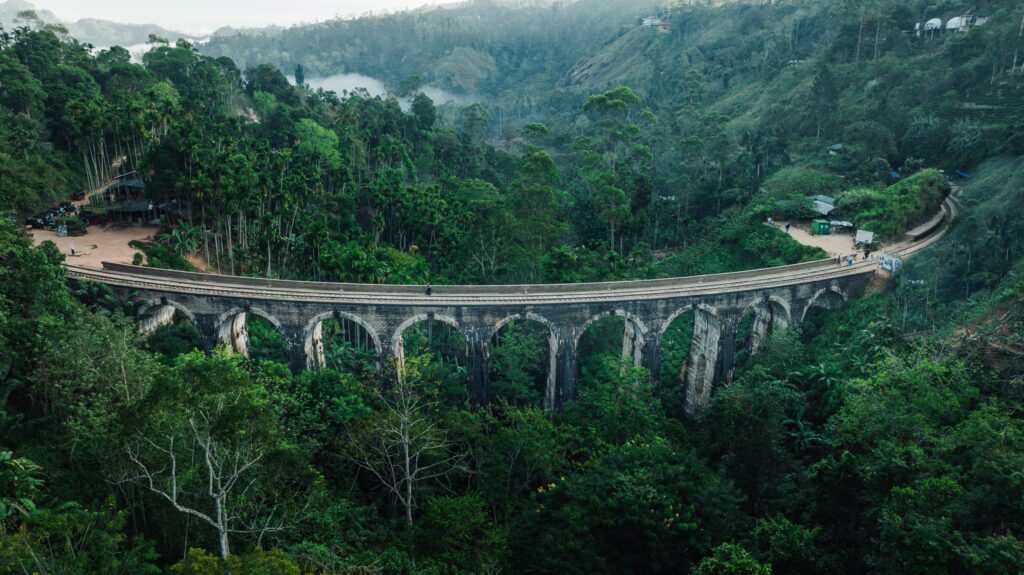
Ella sits at the southern edge of the hill country in a gap between mountain ridges that frames views across the lowland plains all the way to the south coast on clear days. The town has become one of Sri Lanka’s most visited highland destinations – a small community of guesthouses, cafes and trekking outfitters surrounding the iconic Nine Arches Bridge and the trails to Little Adam’s Peak that define a Sri Lanka highland experience.

The island before the roads arrived.

Beyond the national parks and the recognized heritage sites, Sri Lanka holds a set of natural and ecological destinations that reward the traveler willing to venture slightly off the itinerary everyone else is following. These are places where the relationship between landscape, wildlife and local community is more complex, more nuanced and more rewarding than a standard tour stop.
HIRIKETIYA

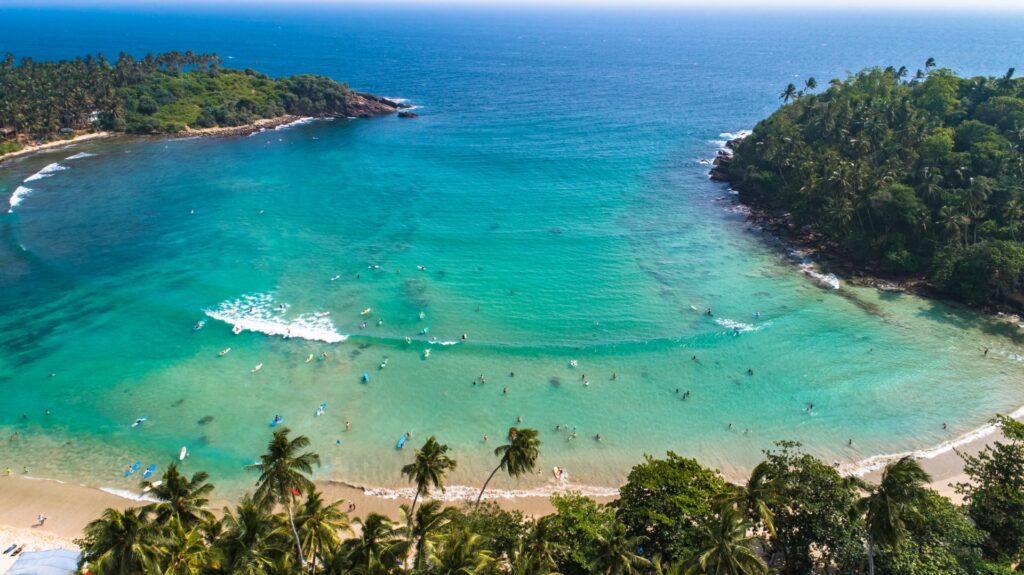
Hiriketiya is a horseshoe cove at the far southern tip of Sri Lanka – a beach that was found late by tourism and has retained a laid-back atmosphere that the more popular southern beaches have largely lost. The bowl-shaped bay creates consistent surf conditions, the community of surfers and yoga practitioners who have settled here give it a genuine culture and the proximity to Tangalle means it fits naturally into a southern coast itinerary.

MADU RIVER

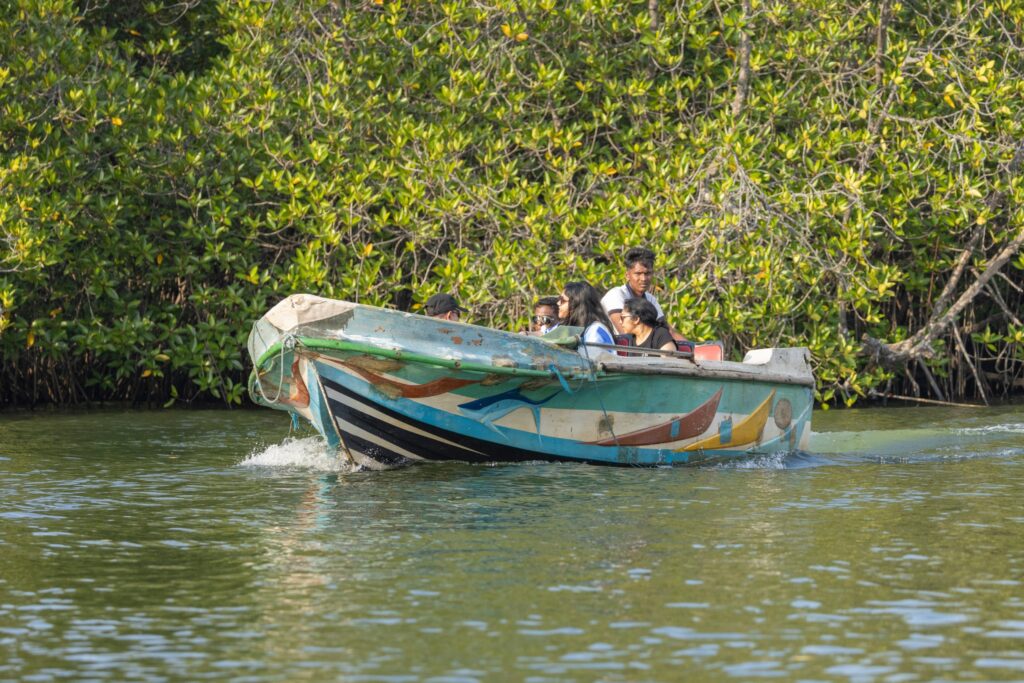
The Madu River in the southern wet zone flows through a landscape of mangrove islands, floating herb gardens and shallow cinnamon-scented waterways that make it one of Sri Lanka’s most distinctive river environments. Boat safaris here take travelers through channels where fish, birds, monitor lizards and estuarine crocodiles coexist in remarkable density.

RITIGALA FOREST MONASTERY

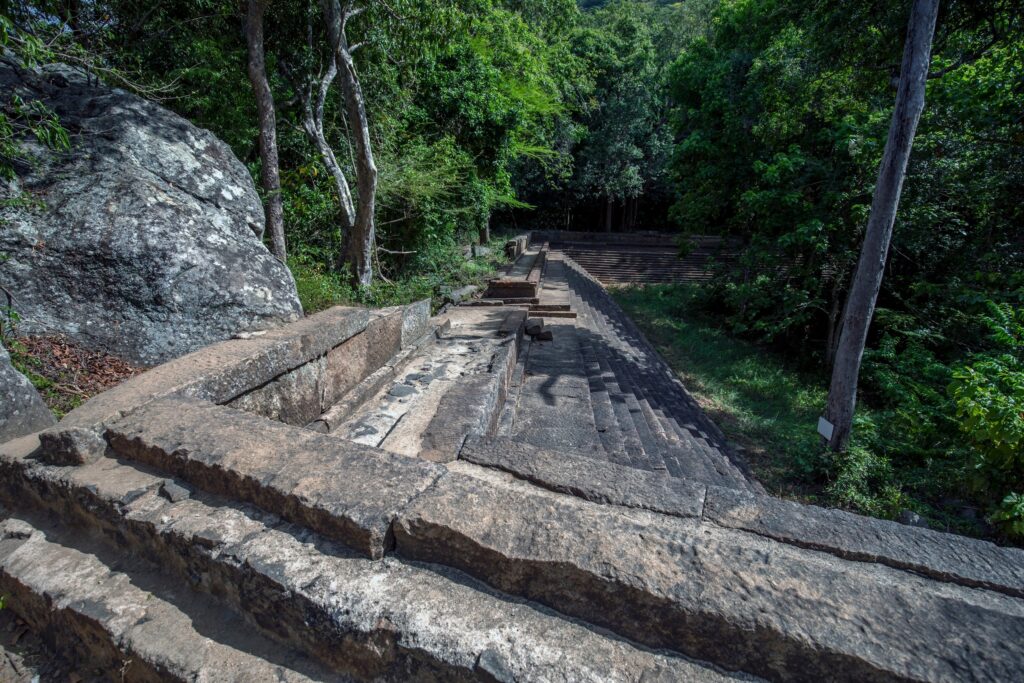
Ritigala is one of Sri Lanka’s least-visited and most atmospheric archaeological sites – an ancient forest monastery built at altitude in a dedicated wildlife sanctuary that has been left almost entirely to the forest. The ruins are subtle, intentionally so – a Buddhist architectural tradition here valued integration with nature over monumental expression. The walk through the forest to the site is as much of the experience as the monastery itself.

GAL OYA NATIONAL PARK

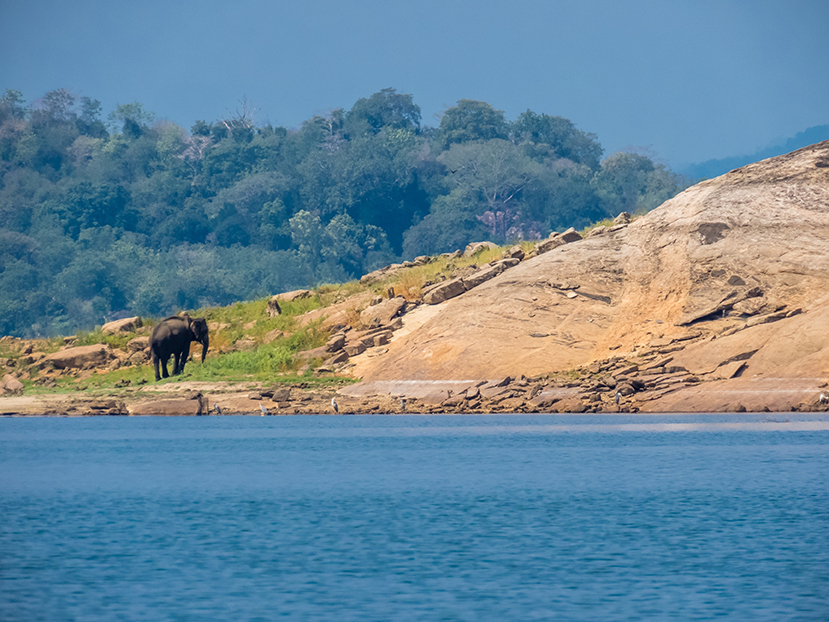
Gal Oya is the only national park in Sri Lanka where elephants can be observed from a boat – a boat safari across the vast Senanayake Samudraya reservoir that constitutes the park’s heart. The experience of watching elephant herds move between islands and wade through open water is genuinely unlike any other wildlife encounter on the island.

NUWARA ELIYA

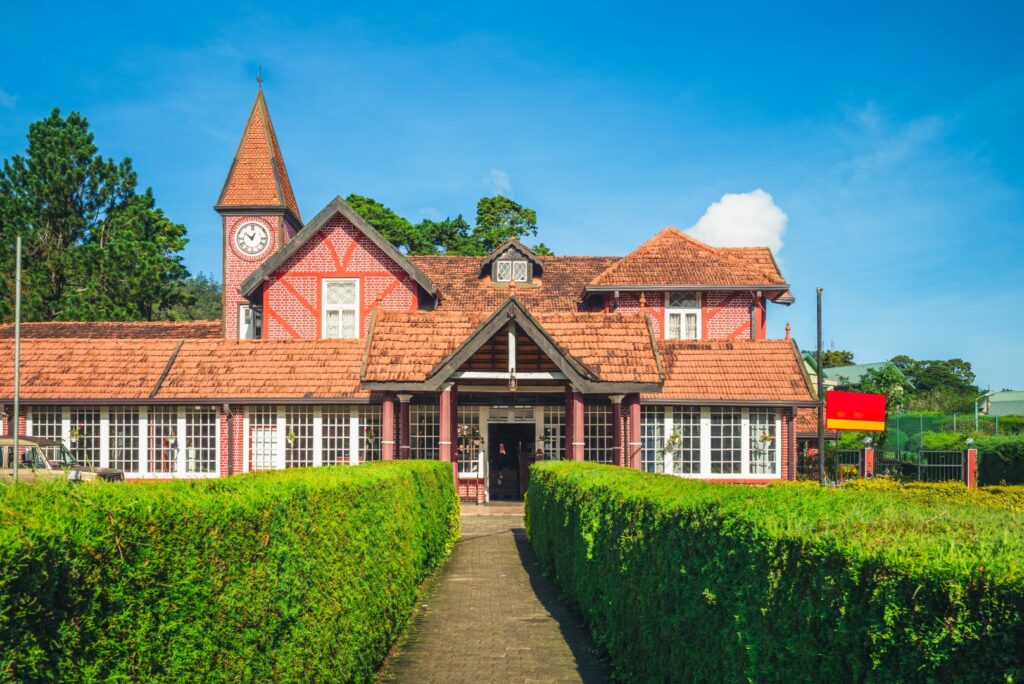
At nearly 2,000 metres, Nuwara Eliya is Sri Lanka’s highest town and its most colonial – a place where Victorian hill station architecture, manicured race courses and English country garden nurseries survive in the cool air of the central highlands. The tea estates surrounding the town produce some of the most famous high-grown Ceylon teas in the world and are best explored on foot, in the early morning light.